LHOTSE EXPEDITION
USD 38,000 / Per Person
Trip Overview
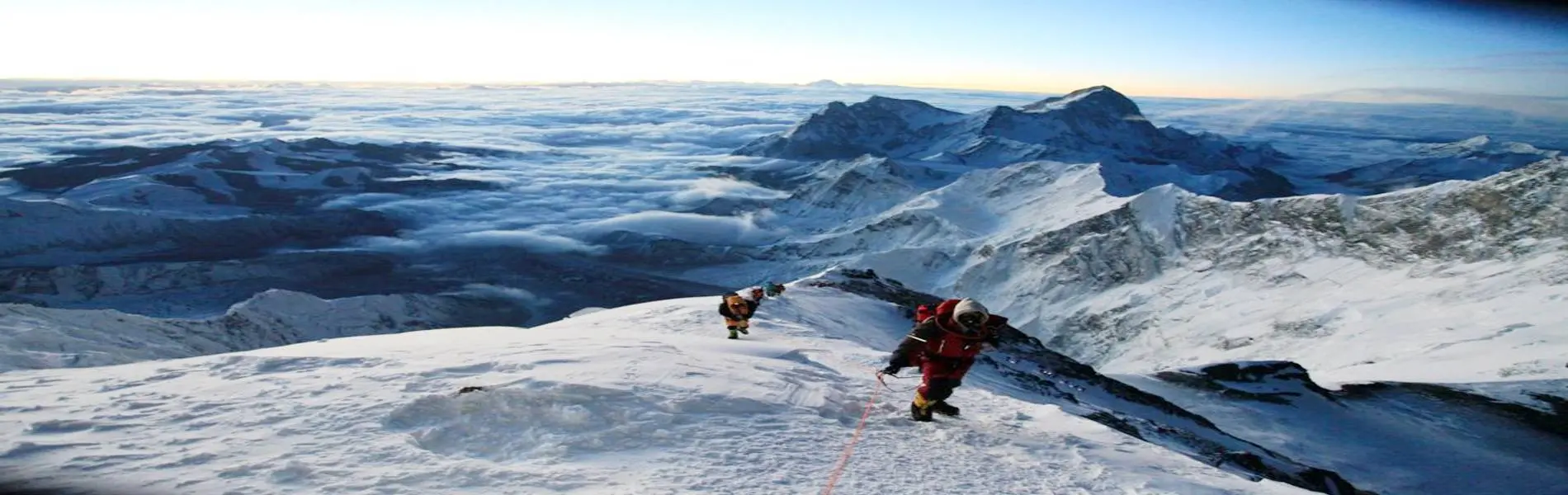
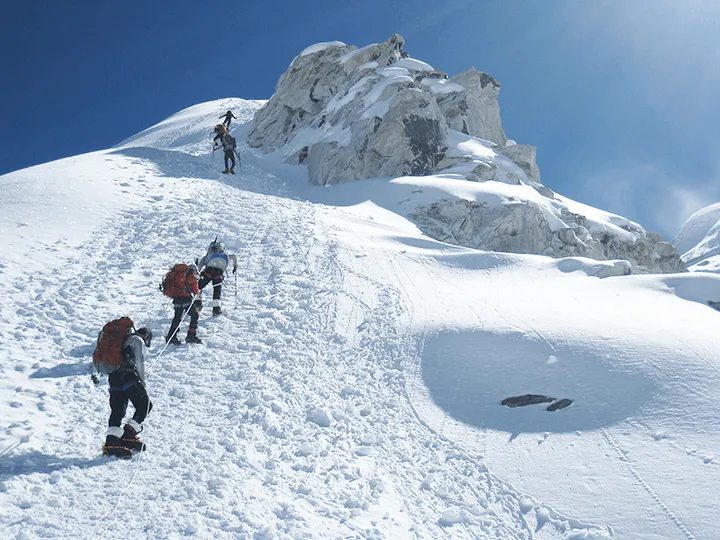
Take a detour at the “Yellow Band” and head to Lhotse as you make your way on the route toward Everest’s summit. Lhotse will not disappoint the serious alpine climber.
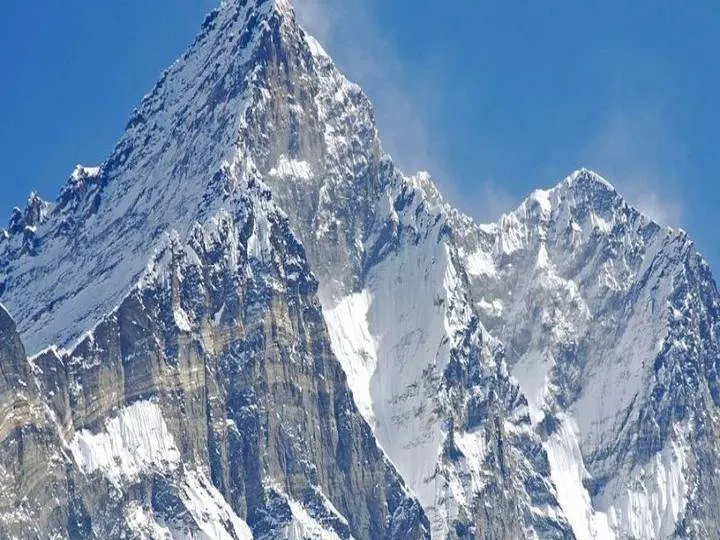
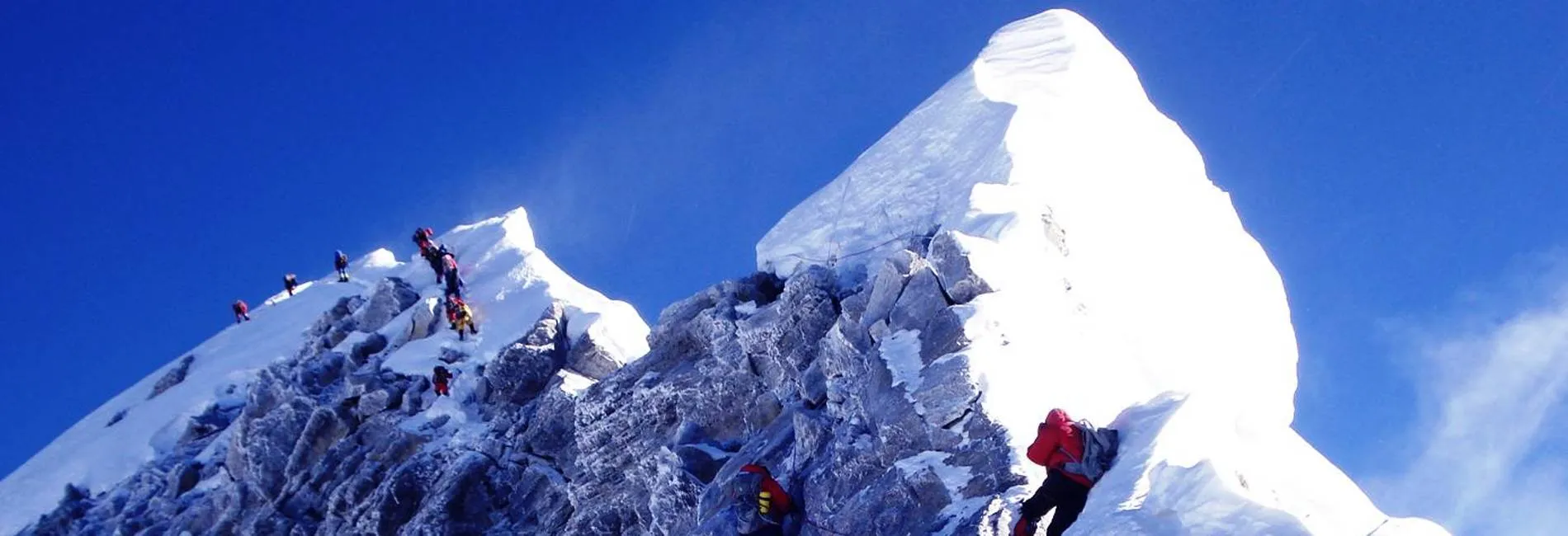
Lhotse, at 8,516m (27,940ft) comes in as the 4th highest mountain in the world after Mount Everest, K2, and Kanchenjunga. Lhotse is connected to Everest by the South Col (a sharp-edged notch or pass that connects Everest and Lhotse) located on the west face of Lhotse. Col is an abbreviation of the French word couloir meaning a steep, narrow gully on a mountainside. This happens to be the most difficult and challenging part of the ascent to the summit. Its exposure to the elements and high winds usually ensures it is free of a build-up of snow. The South Col’s altitude never drops below 8000m and is also referred to as the “Death Zone”, due to the threat of altitude sickness. This is usually the main cause of failed attempts on the summit. Lhotse’s South Face rises steeply, making it the steepest mountain face in the world, and added to this is what is referred to as Yellow Band, an area of sandstone rock where crampons become less effective. Another challenge is the Geneva Spur, a large rock structure near the summits of Everest and Lhotse situated above Camp III and the Yellow Band, before Camp IV and South Col. It is obstacles like these that test the endurance and skills of even the most seasoned mountaineers, and often leads to a failed attempt at the summit.
The other obstacle in reaching the summit, other than altitude sickness, is the weather, and as we know this is in the hands of the Gods. Our expedition leaders are well equipped with the latest technology to receive accurate forecasts. Irrespective of technology, your experienced Sherpa guides will also know and advise you of whether an attempt is likely to succeed.
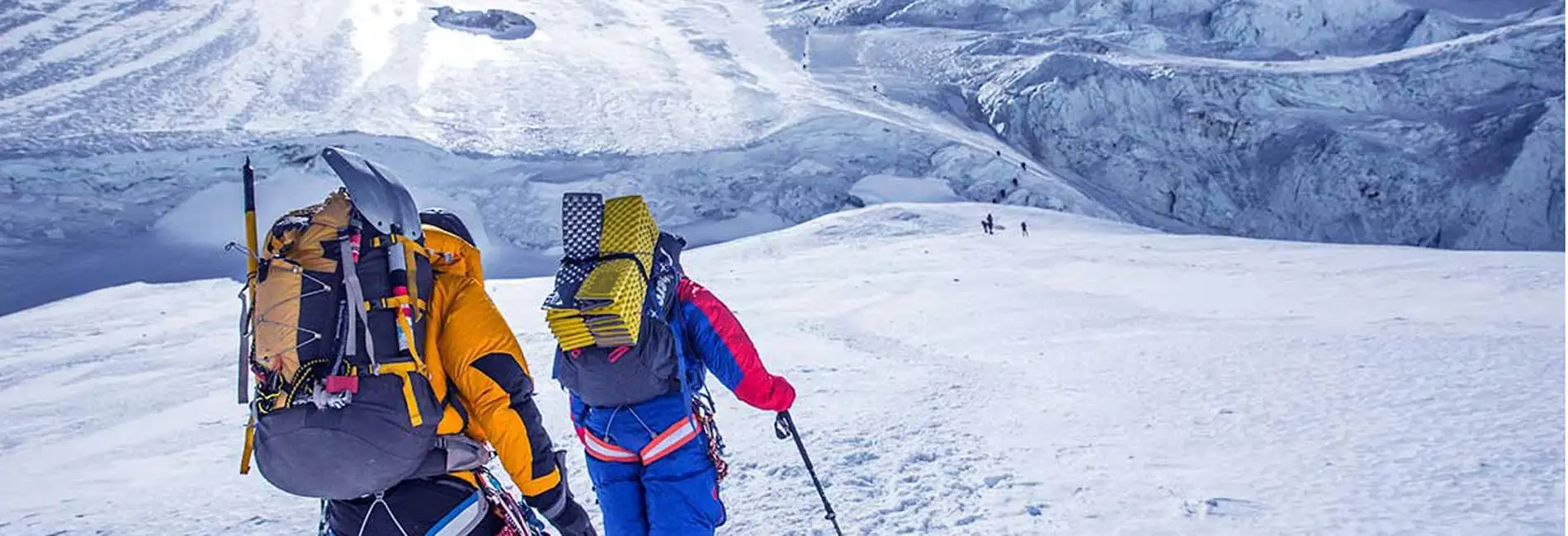
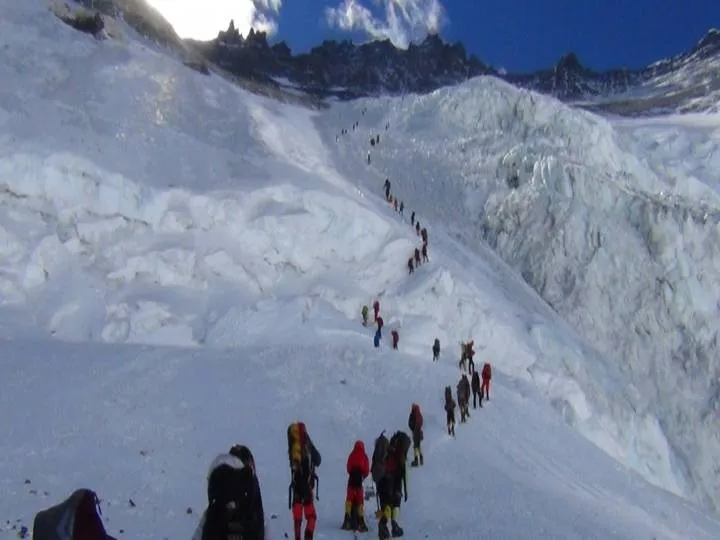
The Lhotse expedition route takes you across the Khumbu Glacier, the same route that Everest ascenders follow on their way to the summit. Once you reach the Yellow Band we head to the right and Everest summiteers go left. Lhotse comprises of three summits: Lhotse Main (8516m), Lhotse Shar (8383m), and Lhotse Middle or East (8413m). Camps are established from Base Camp right up to Camp 4 close to South Col. Leaving Camp 4 we tackle the climb to Lhotse summit.
Adequate time to acclimatize is the key to any serious climbing expedition - especially at these extreme altitudes. There will be many climbs up and back to base camps that will ensure you are safely acclimatized before your assault on the summit.
Lobuche Peak (6119m) is often climbed, if time permits, as a warm-up and acclimatization method prior to climbing Lhotse.
Sherpa Expedition and Trekking’s Sherpa guides (well known for their climbing skills) will do everything within their power to lead you safely to the summit. Our guides are government certified and experienced climbers. We take no chances with your well-being and hence have allowed several days to make up for unforeseen circumstances, such as adjusting to higher altitudes and the possibility of altitude sickness.
Sherpa Expedition & Trekking has more than 40 years in the trekking and climbing business. We have an unparalleled reputation in providing logistical support and excellent client service.
LHOTSE EXPEDITION Day-by-day ITINERARY
LHOTSE EXPEDITION INCLUDES & EXCLUDES
Full Board Service Includes
- Arrival and departure transfer services to Domestic flight as per itinerary.
- Assistance at the International airport by Shera Expedition and Trekking while arriving and departing in Kathmandu.
- 4 Nights 5-star category hotel accommodation in Kathmandu on B/B basis.
- Experienced and government licensed high altitude trekking and climbing guide during the trekking and climbing period.
- Schedule Flight Tickets for Kathmandu-Lukla-Kathmandu sector to all climbing members, Sherpa guide, liaison officer, and kitchen staff.
- All trekking and mountaineering equipment like; kitchen tent, store tent, dining tents, toilet tents, tables, chairs, and cooking utensils for advance Base Camp and camp two.
- Common climbing equipment (necessary fixed and main rope, ice bars, ice screws, snow bar etc)
- Services of cook and kitchen boy at Base Camp and cook at Camp 2
- 3 meals a day (Breakfasts, Lunch, and Dinners with tea/ coffee) in available tea house/hotel/lodge during the trekking
- 3 fresh meals a day (Breakfasts, Lunch, and Dinners) will be served at base camp, and camp two.
- All food and fuel for Base Camp and higher camps during the expedition for both members and crews.
- Per person 60kg baggage allowance during trekking-up carrying by porter or Yak to climbing the Base Camp
- Daily Weather Report Services from Seattle based
- Trekking Permit (Everest National Park entry fee)
- TIMS card (Trekking Information Management System).
- Expedition Royalty and climbing permit of Nepal Government to climb Lhoste
- Nepalese Government Royalty and fees;
- One Experienced, Trained, Government Licensed, and 03 Times Everest Summiteers Climbing/expedition Guide (Sherpa) per client.
- All wages, equipment, medical and accidental Insurances for all involved staffs in trekking and expedition.
- Medical consultation services at the base camp with the HRA clinic at the base camp.
- Equipment allowances and wages for Climbing Sherpa’s, cooks, kitchen boys.
- Equipment allowances and wages for Government Liaison Officer.
- First Aid medical kits for the Group and the staffs.
- Satellite phone carrying by Guide for communication and available for members with the cost of US$ 3 per minute call.
- Appropriate food for high altitude and all climbing crew at base camp and above as required.
- Required fixed and dynamic rope during the climbing period.
- The heater will be provided at base camp for heating the dining room.
- Emergency Oxygen, mask, and regulator provided on requirement of guest with appropriate charge
- Each expedition member will have an individual tent available in the ABC.
- Solar panel for light and battery charger.
- All tents for camp 1, 2, 3, and 4 for members and staff.
- Icefall charges by Sagarmatha Pollution Control Committee.
Full Board Service Excludes
- Lunch and Dinner during your stay in Kathmandu (except for the farewell dinner)
- Any packed food/snacks, aerated drinks, energy drinks, mineral water, alcohol, cigarettes, chocolates, nutria-bars during the trekking.
- Items of personal nature, Laundry Expenses, Tips.
- Any extra expenses arising out of various/unforeseen situations like natural calamities, landslides, political disturbances, strikes, changes in Government regulations, etc.
- Extra transportation then displays in the itinerary program.
- Any additional staff other than specified.
- Rescue, Repatriation, Medicines, Medical Tests, and Hospitalization expenses.
- Medical Insurance and emergency rescue evacuation if required.
- Travel Insurance and helicopter rescue.
- Wallie-talkies & Filming permit (if the special camera or walkies-talkies).
- Personal climbing gears;
- Expenses incurred towards usage of landlines, mobiles, walkie-talkies or satellite phone And Internet expenses
- Clothing, Packing Items or Bags, Personal Medical Kit, Camera/Video Fees or Trekking Gears
- Nepal custom duty for import of expedition goods.
- Summit bonus for climbing Sherpa Guides as per Mountaineering Association rules. Minimum US$ 1500.00 per climbing Sherpa guide.
- Tips and gifts for base camp and high altitude trekking and climbing staff are mandatory.
- Airfare of international flights.
- Nepal entry visa fee (easy to obtain the visa on arrival at Tribhuvan International Airport – Kathmandu). $30 USD for 15-day, $50 USD for 30 Days, and $125 USD for 90 Days visa.
- Any extra services or products or offers or activities which are not mentioned in the itinerary.
- Any other item not included in the cost includes section
LHOTSE EXPEDITION PACKING LIST
Travel Documents
- Valid Passport
- Credit Cards
- Pp Size Photo (4 Pieces)
- Insurance Paper And Contact Address.
- Family Members / Company’s Contact Address
Foot Wear
- Kailas / Lasportiva / Millet (Summit Shoe)
- Normal Socks (5-6 Pairs)
- Summit Socks (2 Pairs)
- Trekking Shoes (1 Pair)
- Camp Booties (1 Pair)
- Basecamp Slipper (1 Pair)
Upper Body
- Light Weight Top / Thermo Coat (2-3 Layers)
- Mid Weight Top (2-3 Layers)
- Heavy Weight Top (2 Layers)
- Fleece Jacket (1)
- Gore Text Jacket (1)
- Down Jacket (1)
- Wind Proof Jacket
- Cotton T-Shirt For Base Camp. (2-3)
Lower Body
- Light Weight Long Under Pants (2-3 Pairs)
- Under Wear (5-7 Pairs)
- Mid Weight Long Under Pants (2-3 Pairs)
- Heavy Weight Long Under Wear
- Gore Text Pant. (1)
- Down Pants. (1)
- Water Proof Pant. (1)
Head
- Sun Cap
- Desert Cap
- Balaclava
- Fleece Hat
- Neck Gaiter (2-3)
Hands
- Thin Fleece Gloves (2 Pairs)
- Wind Stopper Fleece Gloves
- Heavy Gloves (Mitten)
- Summit Gloves
Sleeping Bags
- Sleeping Bag - 20 Degree Celsius (For Base Camp)
- Down Sleeping Bag - 20 To -40 Degree Celsius (Extreme Comfort)
- Thermarest Mattress (Cell Foam)
- Thermarest Mattress (Inflatable)
Climbing Equipment
- Climbing Helmet
- Down Suit (Kailas / Marmot / Mountain
- Hardware / North Face / Millet )
- Crampons (Fit with Boot)
- Ice Axe
- Harness
- Atc Guide
- Jummer / Ascender
- Lock Carabiner (3)
- Unlock Carabiner (3)
- Tape Slings (2)
- Prusik Loops (1)
- Snow Goggle
- Head Light (4 Pairs Rechargeable Batteries Recommended)
- Satellite Phone
- Hand Warmer (If Possible)
Bag Packs
- Rucksacks 45L - 55L
- Duffle Bag 90 L -120 L (2 Pieces)
- Water Proof Stuff Sacks Large (2 Pieces)
- Water Proof Stuff Sacks Small (2 Pieces)
Sun Stuffs
- Banana Boat/ Nivea Sun Cream -50 (Spf)
- Lip Guard -20 / -50 (Spf)
- Sun Glasses (UV Protection)
- Glaciers Glasses (UV Protection)
Toiletries
- Hand Disinfectant
- Wet Tissue
- Toothpaste
- Toothbrush
- Soap
- Shampoo
- Garbage Bag
Eating & Drinking
- Water Bottle (2)
- Thermos
- Mug
- Spoon/ Fork
- Bowl
Medical
- Brufen / Ibuprofens
- Antibiotic
- Diamox
- Paracetamol
- Handy Plaster
- Crack Bandage
- Tincture Iodine
Miscellaneous
- Walking Stick
- Pocket Knife (Swiss)
- Umbrella / Rain Coat
GOOD TO KNOW ABOUT LHOTSE EXPEDITION
Here are some important things to know about the LHOTSE Expedition:
1. Location: Lhotse is the fourth highest mountain in the world and is located in the Mahalangur Himal range in Nepal, near Mount Everest.
2. Difficulty: Lhotse is known for its challenging climbing conditions, including steep ice slopes, rock faces, and high altitude. It requires technical climbing skills and previous experience in mountaineering.
3. Altitude: Lhotse's summit stands at 8,516 meters (27,940 feet) above sea level. Acclimatization is essential to prevent altitude sickness and ensure a safe ascent.
4. Expedition Length: The duration of a Lhotse expedition can vary depending on the climbing route and weather conditions. Typically, it takes around 6-8 weeks to complete the expedition, including acclimatization periods.
5. Climbing Routes: The most popular route to climb Lhotse is via the South Col, which is the same route used to climb Mount Everest from the Nepal side. Another route is the West Face, which is more technically challenging.
6. Permits: Climbing Lhotse requires obtaining a climbing permit from the Nepal Mountaineering Association (NMA). You will also need to have a liaison officer from the NMA accompany your expedition team.
7. Sherpa Support: Most expeditions to Lhotse rely on the expertise and support of Sherpas, who are experienced climbers and guides. They help with carrying equipment, setting up camps, and guiding climbers during the ascent.
8. Equipment and Gear: Climbing Lhotse requires specialized mountaineering equipment, including ice axes, crampons, harnesses, ropes, and high-altitude clothing. It is essential to have proper gear and clothing suitable for extreme weather conditions.
9. Training and Experience: Prior mountaineering experience and physical fitness are crucial for a Lhotse expedition. It is recommended to have previous high-altitude climbing experience and undergo specific training programs to prepare for the challenges of the climb.
10. Safety Measures: Safety is of utmost importance during a Lhotse expedition. It is essential to follow the guidance of experienced climbers and guides, have proper acclimatization periods, and be prepared for emergencies with necessary medical supplies and evacuation plans.
Remember, climbing Lhotse is a serious undertaking that requires careful planning, preparation, and experience. It is always recommended to consult with professional mountaineering organizations and experienced climbers before attempting the expedition.
ROUTE MAP OF LHOTSE EXPEDITION
Gallery of LHOTSE EXPEDITION

LHOTSE EXPEDITION Departures
Every departure listed below is 100% Guaranteed — once you book, your trip will run as scheduled regardless of group size.
Select a departure month
Fill out the form below and a Travel Expert will reach out to create your perfect tour.
FAQS Related to LHOTSE EXPEDITION
Others
Lhotse is considered to be slightly less difficult to climb than Mount Everest, but it still presents significant challenges. The technical difficulty and steepness of certain sections of Lhotse make it a demanding climb.
Yes, it is possible to climb Lhotse without climbing Mount Everest. However, many climbers choose to attempt both mountains during the same expedition due to their proximity and shared climbing routes.
The cost of a Lhotse expedition can vary depending on several factors, including the climbing route, duration, support services, and logistical arrangements. On average, the cost can range from $40,000 to $70,000 or more.
Yes, prior mountaineering experience is essential to climb Lhotse. It is recommended to have experience in high-altitude climbing, technical ice and rock climbing, and be comfortable with long-duration expeditions.
The best time to climb Lhotse is during the pre-monsoon season (April-May) and post-monsoon season (September-October). These periods typically have more stable weather conditions and lower chances of avalanches.
The duration to summit Lhotse can vary depending on the climbing route, weather conditions, and individual climber's fitness level. On average, it takes around 2-3 weeks from base camp to reach the summit and return.
Climbing Lhotse, like any high-altitude mountaineering, carries inherent risks. The extreme altitude, harsh weather conditions, avalanches, and technical difficulties make it a challenging and potentially dangerous expedition. It is crucial to have proper training, experience, and safety measures in place.
To climb Lhotse, you need to obtain a climbing permit from the Nepal Mountaineering Association (NMA). The permit can be obtained through a registered trekking agency or a professional mountaineering organization.
There are no specific age restrictions for climbing Lhotse. However, climbers are required to be in excellent physical condition and have the necessary mountaineering experience.
In case of illness or injury during the expedition, it is crucial to have a well-prepared evacuation plan in place. Helicopter rescue services are available in the Everest region, but it is recommended to have appropriate travel insurance that covers high-altitude rescues.
RELATED PACKAGES
Latest Traveller’s Reviews
Travel experiences of our clients who recently returned from their trips.
100%
Based On 7 Reviews
Mike Campbell
Canada
November 1, 2023
Smooth Sailing from Start to Finish
Damon Mark
Austria
July 20, 2023
A Life-Changing Experience on LHOTSE EXPEDITION
Laura Howell
Romania
April 29, 2021
An Adventure of a Lifetime

Write Your Review
Average Customer Ratings
How The Travellers Have Rated This Package
7
0
0
0
0